
The most exciting news in social last week was Facebook's formal announcement of its Audience Network, which now allows all Facebook advertisers to extend their ads to mobile App's. Advertisers will also be able to take advantage of the targeting intelligence of Facebook to reach potential customers.Facebook has essentially created a mobile ad network to generate higher reach and increase revenues. Think Google AdSense, which brings Google's Search Intelligence to publishers, and made up 22% of Google's revenue in 1Q14.Here's a quote from one of Facebook's engineers, Tanya Chen,
“The Audience Network shows people the right ads by extending Facebook’s targeting to third-party apps,” Chen goes on. “This means the ads match the interests of people, just as they do on Facebook. It also means people are more likely to engage with the ads.”
Current ads that are available to run are:
And, the ads can run in 3 creative formats:

I think the core benefit to advertisers is that the Audience Network extends the reach of a target audience. In essence, target audience segments should now have a longer life span and won't burn out so quickly. In addition, executing a buy across the mobile app network is also easy as it uses the same ad specs as newsfeed ads.Want more tips and tricks for how to dominate social this year with Data, Creative and Amplification? Download our 2016 Social Media Survival Guide.

In the first part of this series, Kyle showed you his process of taking mouth-watering images of food. With a little bit of retouching, we can turn these images into strong content for the social space.

FILE MANAGEMENTEach photo shoot produces more than a thousand raw images, making strong file organization during image editing an important step. Properly naming files and saving to relevant folders makes finding images simple, even years later. I organize into client folders, and separate my working files by RAW, Working, and Final.
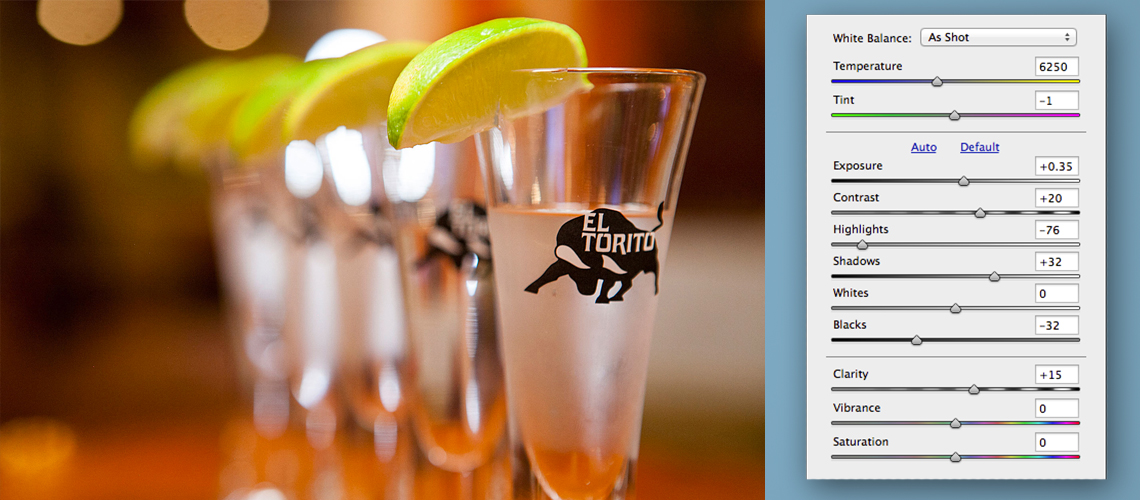
EDITINGThe first stage of my actual retouching is done in Camera Raw. This is where I focus on getting the general look of my image where I want it. I start with general edits, focusing on white balance and bringing out detail in highlights and shadows. With food photography, I’ll often add a bit of contrast and clarity, to help the food or drink pop more from the background. This is especially helpful if we have a variety of colors and tones blending in the backgrounds from the restaurant environment.Once my image looks close to what I want in Camera Raw, I’ll export a full resolution PSD and save to my “Working” folder for more detailed edits.

My final editing phase is combing through each image to remove any distractions. Often, there won’t be much left to do, but this last phase nicely rounds out our images as professional content for social. When photographing food, we’ll often have to clean up crumbs and flaws in the table, and clean up excessive condensation on drinks. Our goal is to keep the food looking natural, but presented in a clean and appetizing manner.Once I’m happy with how the image looks, I’m ready to export. We save one for web at 72ppi and another in high resolution in case they ever need to be printed.

CREATIVE FOR SOCIAL POSTSA lot of the photo work we do at Socialtyze is repurposed in multiple social environments. We often pair these images with text for promotions, quote cards, Twitter chats and social covers.It’s important to design for the right social space. For Facebook, keep timeline posts in a square format to avoid content being cropped or shrunk down in newsfeeds. Similarly, design Twitter posts at 1024x512. This will ensure all content is seen, even when users don’t open the image all the way. You can view our sizing guide for all platforms here.Keep social posts simple and clear. Remember that users are scrolling through an endless feed of content, so you’re fighting for their attention. We aim to keep text short and bold to draw this attention. Give it room to breathe in the negative space, and use colors that feel natural to the image.Also remember that many people are viewing your work on mobile phones. Before I send an image off for approval, I check that it’s still clear on my phone.If an image is used for advertising within Facebook, be sure to keep any text under 20%. To be sure, create a 5x5 grid over the image, and make sure all the text fits within 5 of those boxes.At this point, your fans will surely be craving all that mouth-watering food.Want more tips and tricks for how to dominate social this year with Data, Creative and Amplification? Download our 2016 Social Media Survival Guide.

Since the dawn of social media, the foodie, and foodie post has become a staple in everyone’s News Feed staple. The popular saying “You eat with your eyes,” is now truer than ever, and could even be reworded to “You eat with your Instagram.” #Foodporn has gone mainstream with over 36 million instances. These tantalizing images you see in your feeds also helps drive sales to the brands they represent, and it is for this reason that the brands, and their social photography is more valuable than ever.At Socialtyze we are lucky to partner with a handful of clients in the casual dining and QSR verticals. Developing social content for these brands means bringing their menu to life in a way that connects and drives engagement across all social networks. It also means scale - with multiple posts going out daily, a food brand can gobble up 300 images in 2 months. Meeting this demand requires dozens of photo shoots in a variety of challenging locations, and it also means making sure each shot has an impact. Using that experience, I created this guide to help you craft your own successful foodie posts.

All NaturalThe recipe for a successful food post changes with each client but there are a few techniques that consistently drive engagement. Diffused natural is the secret ingredient to getting food images to shine. Shooting under a canopy outdoors or in front of a window with a diffuser provides an interesting light for your food to shine.

Backlight SuccessWhile we’re at it - make sure the food is between you and the light. Keeping the white balance honed in on the foreground will make sure the food looks soft, balanced and will highlight all the subtle details that appear in the dish. The rim lighting created with this technique will also give your food an elegant frame and.

Double TakeWhen you’re shooting social content for a brand - it’s important to understand their execution. Often times the food shots we create are later edited to highlight a promotion for the restaurant. To prepare for that use case, I typically will shoot the dish twice; once filling the frame and again with a big frame crop (usually above 60%). I want to make sure the angle I have will hold up after the design team has began working their magic.

StagingShooting food affords a pretty cool flexibility that most photography doesn’t - anything can become a stage. I’ve used patio floors, window sills, podiums, park benches and other non-traditional spaces as photography spots. The tightness of the shot lets me focus on the food and transform the unconventional location into an interesting back drop. Experiment and try shooting in random locations - I think you’ll be surprised.

The LensOn the subject of tight shots - there’s only one lens I count on for my food photography. The Canon 100mm 2.8L Macro lens is my work horse for foodie clients. This lens allows me to operate within inches of the food and lets all the little details shine. The prime lens means crystal clear shots and the open aperture gives me the flexibility to add bokeh or give the image a unique depth of field. The creative flexibility and the utility of the short focal length make this the perfect food photography lens.

Camera SettingsSocial posts perform best when they are light and bright. In the camera that means as wide as possible without losing your dish. Most of the time I shoot in the f/5 to f/8 range. For top-down shots (pizza, pasta) or a tall dishes (hamburgers, sandwiches) I can shoot as wide as f/3.5 and the food will stay sharp. Complex entrees or multi shot dishes may require f/10 or higher.

Angle of AttackThere is not one perfect angle for shooting food. Different dishes have a complexity that warrants understanding and adapting to. Big dishes like pizza and flatbread look more interested when cropped in the lens. People are used to seeing an entire pizza from a higher distance, when you crop half the pizza out of the frame and get closer to the toppings, it becomes a more unique and enticing proposition. Burgers and beverages look great when you get low and shoot up, making them larger than life. With social content, the images are often smaller and square - use that to your advantage. Round items contrast well with the Instagram square. Facebook and Twitter cover photos are both very wide and short - framing for this unique proportion will ensure your images look great in their final destination.There is No RecipeWith food (and really all photography) - the best shots are the least expected. Move around, grab different angles, shoot in different places. There is no perfect recipe, but hopefully some of these techniques will be useful to you in your next shoot.Part II - EditingIn part two of this blog, Geoff Roseborough will show some tips on processing and editing images for the social space.Want more tips and tricks for how to dominate social this year with Data, Creative and Amplification? Download our 2016 Social Media Survival Guide.
Social media reveals an ever-expanding amount of detail and insights about consumer preferences and attitudes – what they watch, what they buy, who they vote for, and much more. The ongoing online conversations can be informative, but how do marketers and agencies sift through the noise to extract meaningful insight about consumer attitudes? Some agencies are developing proprietary measures, and marketers' increasing focus on Facebook as their primary social media marketing vehicle is fueling a number of startups seeking to cash in on the consumer insights to be gained from Facebook. A number of firms are launching Facebook contests and surveys, segmenting the large Facebook user base into focus groups. Others are adopting big data techniques to create algorithms to mine insights from Facebook social traffic.Facebook is by far the largest social network with 900 million users; almost three times the number of Twitter users (310 million) and four times the number of users in LinkedIn (255 million) and Pinterest (250 million). Facebook has global reach and demographic diversity so it's the perfect social medium to tap the consumer conscience.Here are just some of the options available to marketers seeking to tap Facebook for consumer research.Monitoring Real-time Consumer EngagementSproutSocial, Oktopost, Hyperactivate and dozens of other emerging social media management platforms all provide the means to measure consumer engagement, and can be used to gauge consumer attitudes if you know how to apply the analytics. Chicago-based SproutSocial is one of the companies that is using Facebook as a means to monitor consumer interest as it relates to real-time brand data. SproutSocial provides a central platform to manage Facebook interaction, publishing content, measuring social engagement, and then using analytics tools to improve performance. The company's customers include top brands such as AMD, McDonald's, Nokia, and Pepsi. While this kind of platform is ideal for managing social media marketing campaigns, it can be useful for monitoring consumer reactions as well.Benchmarking Facebook PerformanceOther companies like Simply Measured are providing more sophisticated social media analysis tools. Simply Measured has a cross-platform social media monitoring platform that lets advertisers analyze engagement on Facebook, Twitter, Google+, LinkedIn, Pinterest, and other social media channels. And its dashboard technology provides a visual snapshot of engagement to better understand what interests Facebook followers.What makes Simply Measured interesting is its ability to benchmark performance against competitors and monitor for consumer interest. The system can generate reports that can measure consumer social media traffic against the competition. It also can track keywords and hashtags to determine what is trending on which social channels; all useful information to see how you can use Facebook for marketing.Extrapolating Facebook LikesFacebook users leave a trail of areas of interest, their politics, income, and more through their online activity. What an individual "Likes" and the content they post tells you a lot about them. Analytics firms like Socialtyze and Cubeyou are extracting that information and aggregating it across the Facebook user population.Socialtyze has been using Facebook Data for two years to identify brands' super fans, as defined by three criteria: Engagement, Sentiment and Influence. The company's proprietary Qu technology analyzes the demographic and psychographic characteristics of a Facebook Fan Page and then uses the data to run look-alike audience targeting. John Bohan, Socialtyze CEO, advises "super fan look-alike targeting has been extremely powerful -- it always outperforms almost other ad target groups as it relates to cost-per-download, video view sign-up, sale, etc… We are essentially looking at the most powerful vocal advocates of a brand and locating people who look just like them in terms of age, gender, likes, interests and many other categories." Specific Socialtyze "Super Fan" examples of return-on-investment performance results are shared below.Cubeyou is a research startup with offices in Silicon Valley and Milan, Italy, that has developed a means of mining Facebook for detailed insight into consumer attitudes about almost any brand. The company's proprietary algorithm correlates Facebook content to reveal patterns about specific types of consumers. Cubeyou's research premise is that "you are what you like," so they track more than 250 million active Facebook users across the globe to determine what they like, and how those likes reflect brand preference and buying patterns.Cubeyou monitors Facebook activity to create a cross-section of consumer preferences that can be assembled for market research. Cubeyou has created 150 specific data points spanning demographics, psychographics, personality types, areas of interest, and other metrics. These data points are mixed and matched to provide profiles of target consumers.For example, if a marketing manager at Nike wants to benchmark customers against the athletic shoe industry, a Cubeyou report reveals customer demographics (gender, age, geography); preferences in music, books, television programs, etc., and reveals the types of sports they follow and the fact they have an environmental conscience and tend to like outdoor activities.What Cubeyou has discovered is that consumers are willing to tell you almost anything you care to know about their habits and attitudes through their online activity. Compared to conventional market research strategies, Cubeyou has tapped into a rich vein of market research that delivers actionable insight quickly.As consumers continue to share their likes and dislikes on social media it will revolutionize market research. Companies like Socialtyze, SproutSocial, Simply Measured, Cubeyou and several others are exploring new ways to tap consumer attitudes.Socialtyze Super Fan Performance Return-on-Investment Provided by Socialtyze exclusively to MyersBizNet1) Client: Entertainment WebsiteObjective: App InstallsFacebook Ad Results by Target Audience-Super Fan Look-alikes: $0.81per installFans: $1.17 per installKeyword Interests: $1.84 per installFriend of Fans: $4.34 per install2) Client: Concert PromoterObjective: Sell Tickets to a 3 Day Concert WeekendFacebook Ad Results by Target Audience-Super Fan Look-alikes: $13.36 per saleKeyword Interests: $26.26 per saleFans: $29.93 per saleCustom Audiences from E-mails: $46.48 per saleFriends of Fans: $224.72 per sale3) Movie StudioObjective: Trailer ViewsFacebook Ad Results by Target Audience-Super Fan Look-alikes - $0.13 per viewFans: $0.27 per viewFriends of Fans - $0.34 per viewDisclosure: MyersBizNet chairman Jack Myers is an advisor to Socialtyze.Want more tips and tricks for how to dominate social this year with Data, Creative and Amplification? Download our 2016 Social Media Survival Guide.
Last week I had the opportunity to go to the iMedia e-Commerce Summit in Salt Lake City.My main take away - Marketers are no longer in the Ad business; they are in the Relationship Business. Brands need to spend less time advertising to their customers and more time connecting with them.Building a brand-to-customer relationship is very similar to someone building a friendship. Both are developed over time with casual, light conversations leading to bigger events.Charlie Cole, CEO of The Line (www.theline.com), has started a new company that is a cross between Vogue and Gilt.com. He is engaging people in world-class fashion content, then slowly converting them over to buying products. His fashion magazine / e-commerce site takes a four-step approachto converting consumers:Step 1 - Read an article
Step 2 - Get them to come back because they like the content
Step 3 - Capture their e-mail or some type of CRM
Step 4 - Convert to Sale

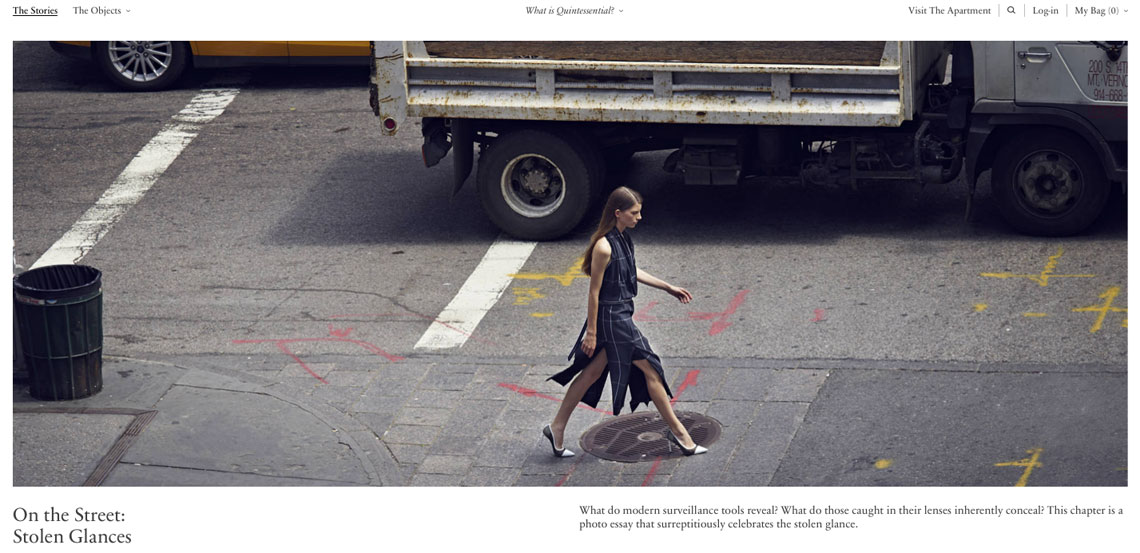
Consumers who visit The Line are first presented with a beautiful image to entice them to engage within content.
The whole premise of the site is the antithesis of the hard sale. It's all about building the relationship by gaining trust through content, leading to the eventual and continuous sale of products. The average transaction on The Line is $500 with some months averaging $850.Laston Charriez, SVP of Marketing for Western Union, also understands the value of content creation leading to sales. He realized that his customers were big fans of animated movies so he produced a collaborative, multimedia, and global marketing partnership with the movie, RIO 2. The content captured the attention of customers then led them down the sales funnel. Revenue saw a nice uptick during the campaign.Laston also made reference to his past job at P&G where he transformed Charmin's advertising from 21 years of Mr. Whipple commercials (remember "Don't Squeeze the Charmin") to a different type of marketing, one that asked:How do I make my customers lives better while remaining relevant to my brand?His answer:Solve their number one consumer bathroom problem--dealing with dirty public restrooms. Laston's solution involved the creation of Plush Porta Potty trucks that were driven into highly trafficked areas such as NFL football games and crowded holiday shopping areas to make both experiences more enjoyable. These luxury porta potties were the rave of both tailgaters and holiday shoppers who were given the opportunity to avoid ugly public restrooms in exchange for a Charmin Posh Bathroom experience.

Just like The Line and Western Union, Charmin sought a softer approach to marketing, one that connected with consumers by solving a problem in their lives, leading to more sales and massive word of mouth marketing.Carlos Gil, Head of Digital and Social Media for Save-A-Lot (a 1,300 grocery store chain in St. Louis) is also passionate about the "Relationship Business". In my conversation with him over dinner, he had many quotes worth repeating. Here are two that I particularly like:
"If someone does not engage with it, it's advertising" (versus more authentic content marketing that builds connections with consumers).

"Not responding to tweets from customers is the equivalent of going to The Cheesecake Factory and not being greeted."
On the flip side, I did speak with a Fortune 50 VP who thought it was was crazy to answer more than a very small percentage of direct fan questions in Social Media. "Do you know how many people ask us questions, and how much it would cost to answer all of them?"To that, I asked him what's the cost of not answering them and what if your competitor is? I continued, "If someone was in your aisles and asked a question to a store clerk, would the clerk turn his back and walk away? Now think of that clerk turning his back with an audience of 10,000 customers watching. That is social. Think of the risk as well as the lost opportunity of not investing in the Relationship Business." At the end of the conversation, he seemed to agree.While developing long-term relationships with customers with the intention of sales is nothing new, I think we are at a tipping point where brands are just starting to really get it. Whether it's delivering Plush Porta Potties or answering every question in social, I believe brands will begin to shift their focus away from delivering an onslaught of inauthentic, self-serving ads and more toward offering value that improves people's lives, and makes the world a better place.Why should the brand-to-consumer relationship be so different than friendships among people? Should we live in a world where brands advertise, persuade, manipulate and hard sell in order to receive?Or, it is simpler than that - You give, you receive.As marketers, if we can begin to think more about how to make the lives of our customers better while staying relevant to our brands, think of the value we could create while simultaneously, making our brands more loved and much more successful.Want more tips and tricks for how to dominate social this year with Data, Creative and Amplification? Download our 2016 Social Media Survival Guide.
Socialtyze - All Rights Reserved 2022